Product Overview
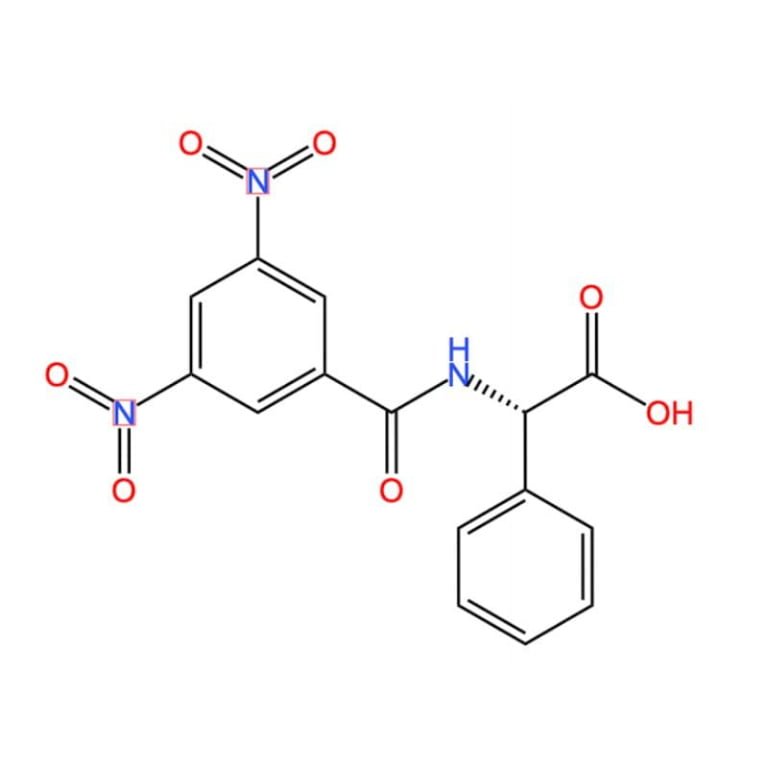
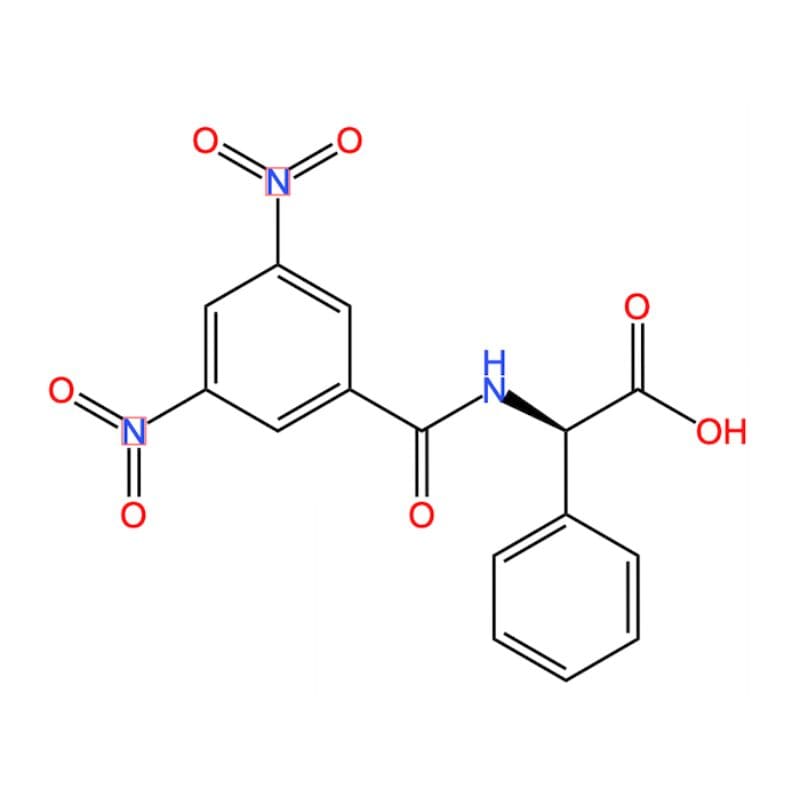
(R)-(−)-N-(3,5-Dinitrobenzoyl)-α-phenylglycine (CAS No. 74927-72-3) is a high-purity chiral derivatizing agent primarily used for enantiomeric resolution in HPLC analysis. This compound is the (R)-enantiomer counterpart to the more common (S)-(+)-form and serves as a valuable tool for determining the enantiomeric excess (ee) of chiral amines, amino acids, and related compounds in pharmaceutical and chemical research.
Product Information
- IUPAC Name: (R)-(−)-N-(3,5-Dinitrobenzoyl)phenylglycine
- Synonyms: (R)-DNB-PG, (R)-(−)-N-3,5-dinitrobenzoyl-α-phenylglycine
- CAS Number: 74927-72-3
- Molecular Formula: C₁₅H₁₁N₃O₇
- Molecular Weight: 345.27 g/mol
- Optical Rotation: [α]D²⁰ ≈ -XX° (c=1, methanol)*
(* Exact measured value available per batch upon request.)
Specifications
- Appearance: Pale yellow to off-white crystalline powder
- Purity (HPLC): ≥ 98% (custom higher grades available)
- Chiral Purity (ee): ≥ 99% (determined by chiral HPLC)
- Loss on Drying (LOD): ≤ 0.5%
- Residual Solvents: Meets ICH Q3C guidelines
Physical & Chemical Properties
- Melting Point: ~180-185 °C (with decomposition)
- Solubility: Soluble in polar aprotic solvents (DMF, DMSO), moderately in methanol and acetonitrile
- UV Absorption: Strong absorbance at ~250-280 nm (useful for HPLC detection)
- Stability: Stable at room temperature under dry, inert atmosphere (sensitive to prolonged light exposure and humidity)
Applications
- Chiral Derivatization for HPLC: Forms stable diastereomers with amines/amino acids for enantiomeric separation and ee determination.
- Asymmetric Synthesis Studies: Used in reaction optimization and chiral catalyst screening.
- Pharmaceutical QC: Supports enantiopurity assessment of chiral intermediates and active pharmaceutical ingredients (APIs).
- Method Development: Suitable for establishing enantioselective analytical protocols in academic and industrial R&D.
(Note: This product is strictly for research purposes—not approved for diagnostic or therapeutic use.)
Storage & Handling
- Storage: 2–8 °C in tightly sealed amber vials under nitrogen/vacuum.
- Shelf Life: ≥ 2 years when stored properly.
- Handling Precautions: Use in a fume hood; avoid inhalation and direct skin contact (consult SDS for safety details).
Packaging & Supply
- Standard Packaging: 100 mg, 500 mg, 1 g (glass vials with PTFE-lined caps).
- Bulk Quantities: Multi-gram to kilogram-scale synthesis available (GMP-grade optional).
- Custom Options: Pre-made solutions in specified solvents (e.g., 10 mM in DMF).
Documentation
- Available Documents:
- Certificate of Analysis (CoA with HPLC, NMR, MS, and chiral purity data).
- Safety Data Sheet (SDS) compliant with GHS standards.
- Application Notes (e.g., derivatization protocols for HPLC analysis).