Product Overview
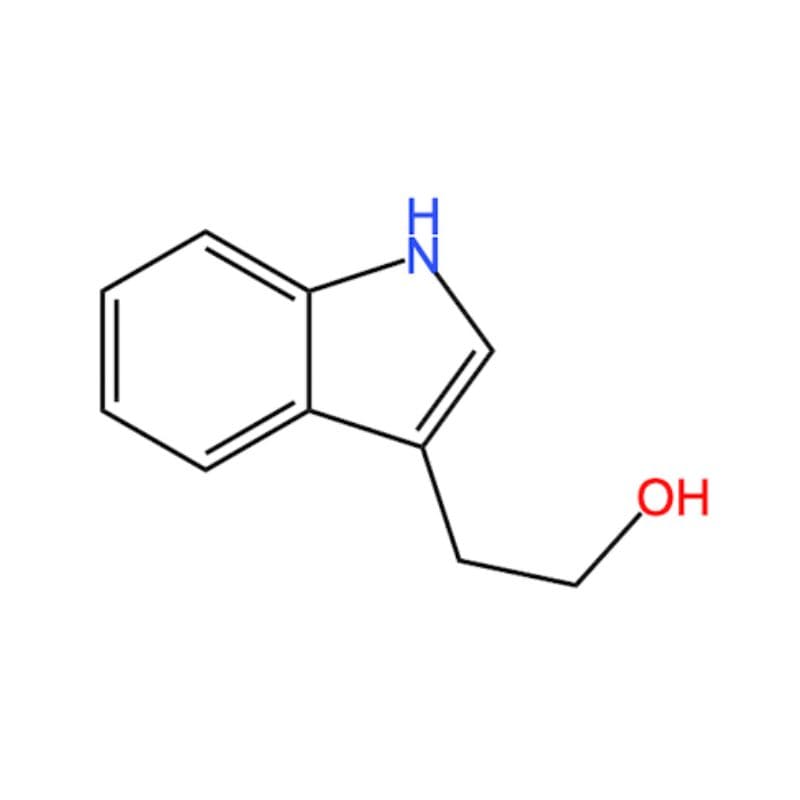
Tryptophol (Indole-3-ethanol, CAS No. 526-55-6) is a naturally occurring indole derivative and a key intermediate in microbial and plant biochemistry. This compound is commonly utilized in research involving serotonin metabolism, plant growth regulation, and fragrance synthesis. Suitable for both academic and industrial applications, Tryptophol is supplied with rigorous purity standards to ensure consistency in biochemical and synthetic studies.
Product Information
- IUPAC Name: 2-(1H-Indol-3-yl)ethanol
- Synonyms: Indole-3-ethanol; 3-Indoleethanol
- CAS Number: 526-55-6
- Molecular Formula: C₁₀H₁₁NO
- Molecular Weight: 161.20 g/mol
Specifications
- Appearance: White to pale yellow crystalline powder
- Purity (HPLC): ≥ 99%
- Melting Point: 58-61 °C
- Boiling Point: ~187 °C (12 mmHg)
- Solubility: Soluble in ethanol, methanol, DMSO; slightly soluble in water
- Storage Temp.: 2-8 °C (protect from light and moisture)
Physical & Chemical Properties
- Density: ~1.2 g/cm³ (estimated)
- Flash Point: > 150 °C
- LogP (Partition Coefficient): ~1.5 (predicted)
- UV-Vis Absorption: λmax ~280 nm (indole chromophore)
- Stability: Stable under standard lab conditions (avoid prolonged exposure to strong light, oxidizing agents)
Applications
- Biochemical Research:
- Intermediate in microbial tryptophan metabolism pathway
- Study of indole alkaloid biosynthesis
- Role in serotonin and melatonin-related metabolic studies
- Plant Physiology:
- Potential precursor in auxin (plant hormone) pathways
- Investigation of fungal-plant interactions
- Organic Synthesis:
- Building block for indole-based pharmaceuticals & fragrances
- Precursor for heterocyclic compound synthesis
- Other Uses:
- Potential research applications in neuroscience (as a serotonin-related metabolite)
- Aroma compound in perfumery research
(Note: This product is intended for research purposes only. Not for drug, food, or cosmetic use.)
Storage & Handling
- Storage: Store at 2-8 °C in a tightly sealed container under inert atmosphere (nitrogen recommended for long-term storage)
- Shelf Life: Minimum 2 years when stored properly
- Handling Precautions: Use in a well-ventilated area; avoid inhalation and direct skin contact
Packaging & Supply
- Standard Packaging:
- 5 g, 10 g, 25 g (amber glass bottles)
- Bulk Quantities: Custom quantities available (up to kilogram scale)
- Special Formats:
- Solution preparations available (specify solvent and concentration)
Documentation
- Available Documents:
- Certificate of Analysis (CoA) including HPLC purity data
- Safety Data Sheet (SDS) compliant with GHS standards
- NMR spectrum available upon request